- Reignite Resilience Thinkletter
- Posts
- She Survived What No One Saw, Then Built a Life No One Expected
She Survived What No One Saw, Then Built a Life No One Expected
A two-part conversation on childhood trauma, survival, and finding stability through leadership and self-trust

Reignite Resilience Podcast
April 23, 2026
This two-part conversation with Heather Washburn, Managing Broker at ReMax Alliance in Windsor, Colorado, explores what resilience looks like when it is not polished or linear.
Heather’s story moves through childhood trauma, survival, reinvention, leadership, and the long process of rebuilding a sense of safety in her own life. These episodes hold space for the reality that healing is not a straight line, and that strength often begins in the moments where everything feels like it is falling apart.
At the heart of this conversation is a reminder: resilience is not about what you never face, it is about what you learn to carry without letting it define you.
Featured Episodes
In Part 1, Heather shares her experience surviving six years of childhood abuse by a trusted babysitter. She speaks about the confusion of being too young to fully understand what was happening, and the emotional weight of staying in a community where the abuser still had influence.
Rather than adopting a victim identity, Heather reflects on how she chose to reclaim her sense of self through action, education, and eventually relocation. She graduated high school early, left Illinois, and built a new life in Colorado.
We also explore how her early career in electroneurodiagnostics and high stress hospital environments shaped her ability to stay calm under pressure, a skill that later became central in her leadership in real estate.
Notable themes and insights
Identity can be rebuilt, even after early trauma
Environment plays a powerful role in healing or harm
Skills developed in survival can become strengths in leadership
Choosing change often starts with recognizing an open door
Key reflection from Heather’s journey
Sometimes stepping forward is not about confidence, but about refusing to stay stuck
Part 2 explores a more recent chapter of Heather’s life, including domestic violence, stalking, and the emotional strain of disentangling a shared home while continuing to function professionally.
She speaks openly about depression, PTSD, and suicidal thoughts, offering a grounded perspective on what helped her stay: small anchors, trusted people, and choosing “one more day” at a time.
Heather also shares how simple grounding practices became lifelines, including gratitude for small, ordinary moments like coffee, sunlight, and breathing.
A key part of this conversation highlights the importance of support systems. For those walking alongside someone in trauma recovery, Heather emphasizes that perfection is not required. Presence matters more than perfect words.
She also highlights the work of the SAVA Center, a Sexual Assault Victim Advocacy Center serving Weld and Larimer counties, offering free therapy for survivors ages 3 and up, SANE exam support, and prevention education focused on body autonomy and boundaries.
Notable themes and insights
Survival often looks like quiet persistence
Healing requires both internal tools and external support
“One more day” can be a powerful survival strategy
Listening can be more healing than advice
Key quote from Heather
“One more day.”
Key Themes & Takeaways
1. Trauma and Identity
Heather’s story shows how early trauma can fracture identity, but not erase it. She demonstrates that identity is something that can be actively rebuilt through decisions, movement, and self-definition.
Key takeaway: You are not limited to the version of you that trauma created.
2. The Body Remembers
From hospital work to PTSD responses, Heather’s experiences highlight how the body stores stress and how high-pressure environments can mirror emotional survival states.
Key takeaway: Healing is not just mental. It is physical, emotional, and behavioral.
3. Survival as a Skill Set
What once helped Heather survive difficult environments became the foundation for her leadership style in real estate: calm thinking, fast decisions, and emotional control under pressure.
Key takeaway: Survival skills can be reframed into leadership strengths when processed with awareness.
4. Support Changes Outcomes
Heather’s story repeatedly returns to the importance of connection, even if it is just a few trusted people who listen without trying to fix everything.
Key takeaway: You do not need many people. You need the right people.
Intentions of the Week
Cultivate Emotional Intelligence and Empathy
This means practicing awareness of your own emotions while staying open to the emotional experiences of others. Empathy is not fixing someone’s pain. It is being willing to understand it without rushing past it.
Lead with Integrity and Authenticity
Integrity is choosing alignment between your values and your actions, even when it is uncomfortable. Authenticity is allowing yourself to be honest about where you are, not just where you want to appear to be.
Pursue Knowledge and Self-Improvement
Growth requires curiosity. This intention is about staying willing to learn from experiences, even painful ones, and using that knowledge to make more grounded decisions in the future.
Learn to Thrive Through Your Greatest Challenges
If this conversation resonated with you, subscribe to the Reignite Resilience newsletter for more stories that center healing, truth, and personal strength.
Share this episode with someone who may need it, and leave a review with your biggest takeaway. Your reflections help expand this community of resilience.
Live Experience: The Time Bender Webinar
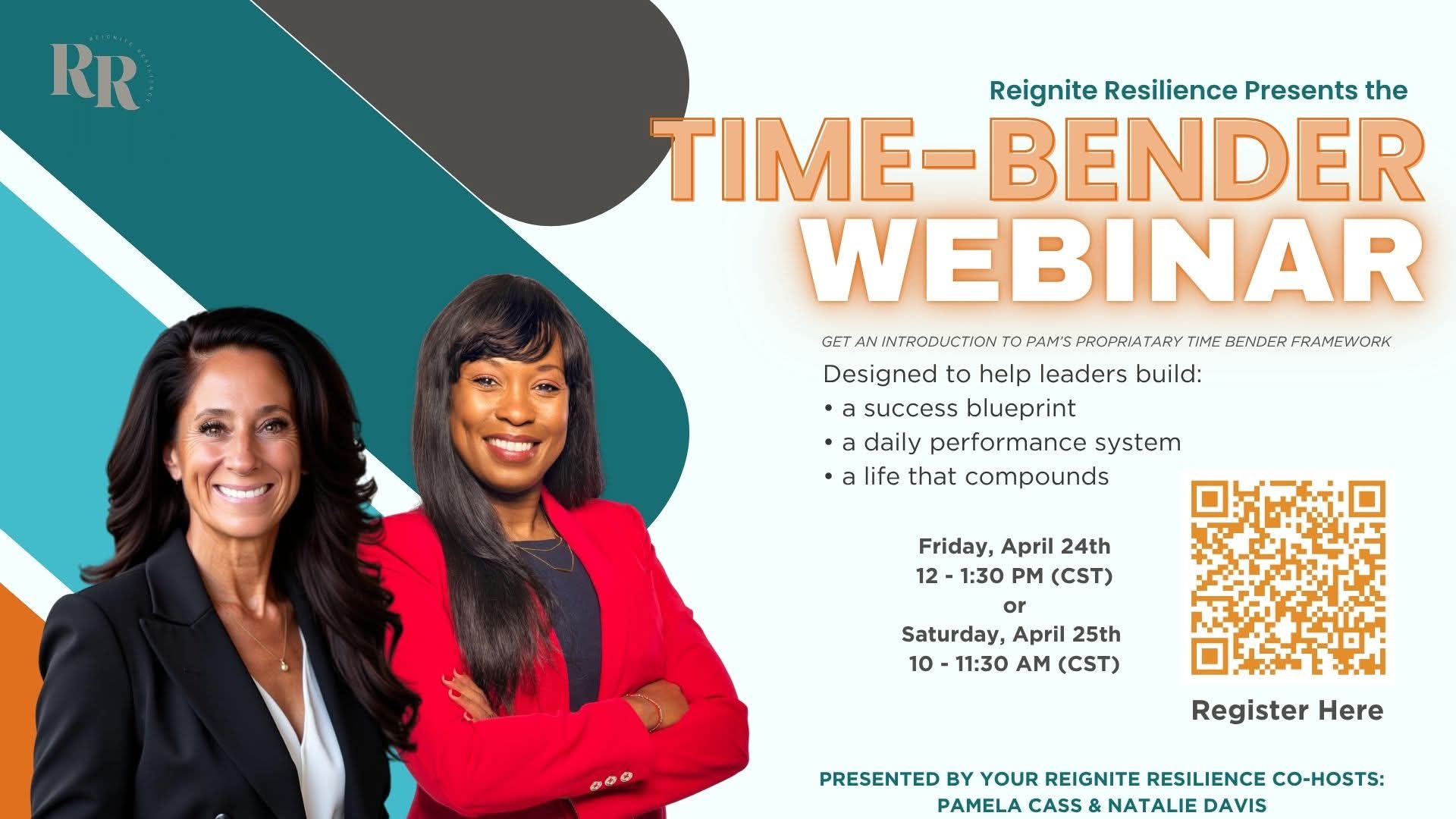
What if success didn’t require exhaustion?
What if your calendar actually reflected your priorities instead of your pressure?
We’re inviting you into a live session designed to challenge how you think about time, performance, and what it really means to lead well.
The Time Bender Webinar is not about doing more. It is about doing what actually matters without burning yourself out in the process.
In this session, you’ll learn:
The three invisible drains quietly stealing your time and energy
Why high performers often feel like they’re always running out of time
The three ways effective leaders bend time instead of trying to manage it
This is for you if you’ve been showing up, getting things done, and still feeling like it’s not adding up the way it should.
It’s time to shift how you work, lead, and live.
Save your spot and join us live.
Tools to Resiliency
The “One More Day” Practice
When things feel overwhelming, focus only on getting through today, not the entire future.Grounding Through the Senses
Name small, real things you can see, hear, or feel, like warmth, light, or sound, to bring yourself back into the present moment.Build a Short Support List
Identify 2 to 3 people you can reach out to without needing to explain everything perfectly.Gratitude Anchoring
Write down or mentally note three small things each day that feel steady or safe, no matter how simple.Active Listening for Supporters
If someone is struggling, focus less on solutions and more on being present and consistent.
Heather’s story is a reminder that resilience is not about having an easy life. It is about what you choose to do after life becomes difficult.
There is strength in survival. There is courage in honesty. And there is hope in choosing to stay, one day at a time.
Thank you for being part of this community.
With warmth and resilience,
Pam & Natalie, Reignite Resilience Cohosts